History of cookware.
The earliest known clay pottery vessels come from China and Japan, with ceremonial pieces dating back 25,000 to 29,000 BCE, and the technique spread East to West from there. Suddenly you had a container that kept food ash-free and could sit right on the heat. That unlocked whole new ways of cooking: boiling, simmering, and steaming.
Clay had one big flaw that still trips up ceramic cookware today: it’s a poor conductor of heat, so it develops hot spots, and it can crack on a direct flame. Great in an oven, tricky on a stovetop.
Then came metal. Copper was the first metal humans used at scale. It’s a fantastic heat conductor and easy to shape.
Fun fact: In towns too small to have a coppersmith, traveling repairmen called “tinkers” wandered from place to place fixing people’s pots and pans because copper and brass were expensive to replace. The concept of “tinkering” evolved to mean casually experimenting with or fixing mechanical devices.
By 500 BCE, the Chinese mastered iron-casting in molds, leading to durable and heavy iron pots. For hundreds of years after that, most cooking looked surprisingly similar across the world: a pot over an open fire. The cookware evolved little features to deal with live fire. Handles and rings so you could hang a pot on a pole above the flames. Long handles so the heat didn’t reach your hand. Little feet to lift the pot out of the coals. The Dutch oven was king.
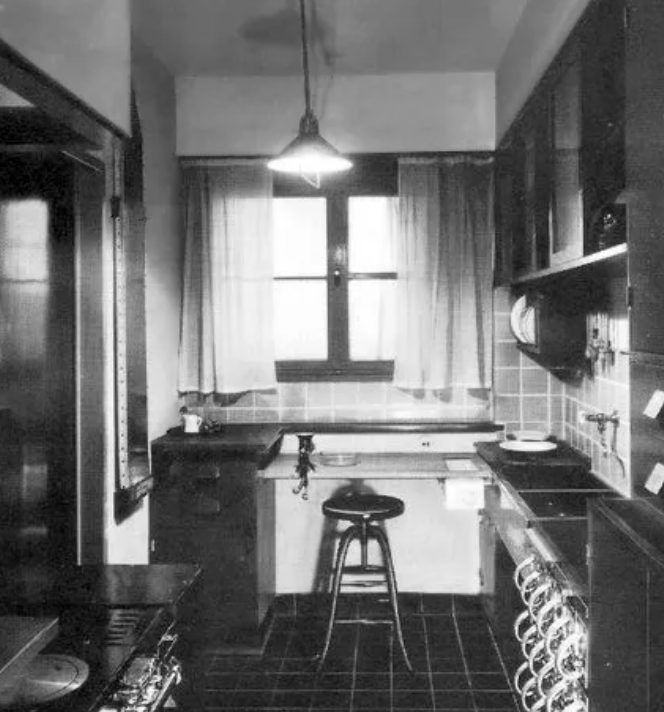
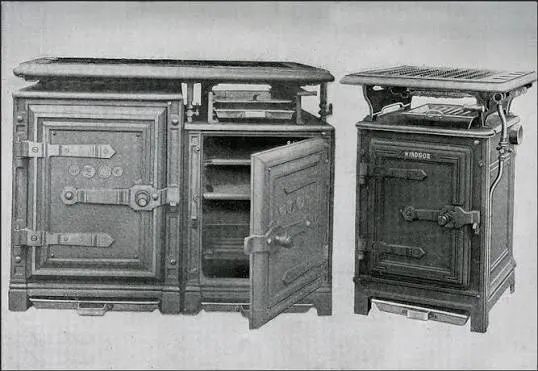
Everything changed with the stove. Benjamin Franklin’s wood range, then the gas oven (patented 1826), then the electric range (1892). Once you had a controlled cooking surface instead of an open fire, the long handles and hanging rings became pointless. Short handles took over. And as refrigeration and mass farming made meat cheap and everyday, frying took off.
The modern materials show up.
The early 1900s brought the materials most of us still cook on. Aluminum (light and cheap, a great conductor). Stainless steel not long after (shiny, tough, and non-reactive, so acidic foods don’t taste metallic). So by the 1930s we had a pretty good toolkit: cast iron, copper, aluminum, stainless.
Then came non-stick.
In 1954, a French engineer named Marc Grégoire was using PTFE to keep his fishing tackle from tangling. His wife, Colette, had the idea that changed everyone’s kitchen: why not put it on her cooking pans? Grégoire figured out a process to bond PTFE safely to aluminum so food would slide right off.
In 1956, Marc and Colette started a company to sell these pans. They named it by mashing together “Teflon” and “aluminum”: Tefal.
In 1961, Trozzolo started selling the first American-made Teflon pan. He called it the “Happy Pan,” and it came with a free spatula. It was a hit. An original Happy Pan now sits in the collection of the Smithsonian’s National Museum of American History.
Note: Teflon is a trademark for PTFE, and PTFE is the coating on most nonstick pans.
So why did PTFE take off?
Crack an egg onto a cold pan, and it still slides off. Cleanup went from scrubbing to a wipe with a paper towel. It was super convenient.
It also arrived at the perfect moment. The 1960s kitchen was all about convenience: TV dinners, the spread of the electric range, appliances marketed to save time. It fit right in.
At the time, PTFE-coated pans were used for cooking in a majority of homes, and continued to grow in popularity for years.
So what’s the problem?
First, an important distinction: not all nonstick is the same thing. Nonstick is a property, not a material. Cast iron is nonstick when it’s seasoned. Enameled cast iron is naturally nonstick. True ceramic coatings are nonstick. None of those involve fluorinated chemistry.
The category people usually mean when they say “nonstick pan,” the slick black or gray coating is PTFE.
PTFE is a member of the PFAS family. PFAS (per- and polyfluoroalkyl substances) are the “forever chemicals” you’ve probably been hearing about, more than 14,000 of them, many linked to cancer, reproductive harm, and hormone disruption. They’re called “forever” because they don’t break down in the environment, and they don’t break down in your body either. They just accumulate.
Now, just the presence of PTFE isn’t the harmful part. It comes down to two things: what happens when it gets hot, and what happens when it gets scratched.
Heat. PTFE is stable at normal cooking temps. But push it past about 260°C (500°F), and it starts to degrade, releasing smaller PFAS molecules and fumes into your air. An empty pan on high heat can blow past that fast. Those fumes cause a real (if temporary) condition informally called “Teflon flu” (polymer fume fever), which hits hundreds of people a year with fever, chills, and headaches.
Scratches. A 2022 study out of Flinders University and the University of Newcastle used a molecular imaging technique to watch what happens when a Teflon coating gets damaged during cooking. A single surface scratch released around 9,100 plastic particles into food. A cracked or broken coating released up to 2.3 million microplastic and nanoplastic particles. Even undamaged pans likely shed particles slowly over time as the coating wears.
It is still not fully proven exactly how much these specific Teflon microplastics harm human health at typical exposure levels.
But my view is that when a risk is poorly understood and easily avoidable, I’d rather just avoid it. Especially in something I use every single day to make food that goes straight into my body. There are good alternatives that carry less of the unknowns.
Before alternatives, a note on aluminum and copper.
These metals are common in lots of cookware and are a topic of discussion because of how they react to acidic foods and can leach into food.
Aluminum. Bare aluminum is soft and chemically active. Cook something acidic (tomato sauce), and measurable amounts of aluminum migrate into the food.
Now anodized aluminum has been electrochemically treated to build a hard oxide layer on the surface, which is far less reactive than raw metal. And clad construction buries the aluminum between layers of stainless so it never touches food.
Copper. Copper is the best heat conductor in any kitchen, which is why a lot of pastry and candy making is done using it. Acidic food in bare copper can pull enough into a dish to cause acute GI symptoms, which is why unlined copper is essentially never sold for general cooking anymore.
The alternatives.
Cast iron
This is the old reliable, and it’s my favorite. A single cast iron pan can be used for decades of cooking. In fact, one pan will last a lifetime if you care for it properly.
There’s also enameled cast iron. It has a nonporous surface, it’s naturally nonstick, and it doesn’t require any seasoning as traditional cast iron does. The enamel protects the iron from rust and makes the pan more durable.
Now cast iron is best when cooking things over low to medium heat. You want to avoid acidic ingredients like tomato, which can leach excess iron from the pan into your food.
Most importantly, clean, dry, and store away from moisture. If you stack pans, put a protective layer (even just a paper towel) between them to avoid scratches that can promote rust.
Stainless steel
Non-reactive, tough, and long-lasting. But there are two things to understand before you buy, because a cheap stainless pan and a good one are not the same.
First, construction. Stainless steel is a bad heat conductor. A pan made of nothing but stainless will develop a scorching ring wherever the burner touches it and stay comparatively cool everywhere else. The fix is to put aluminum inside the pan, a core of it, bonded between stainless layers. The aluminum spreads the heat, the stainless takes the abuse and touches the food. You get aluminum’s conductivity with none of aluminum’s reactivity, because the reactive metal is sealed away from anything acidic.
When you’re shopping, this means looking for “Fully clad” or “three-ply” and “five-ply,” which means the layered construction wraps the entire pan. “Clad base,” “impact-bonded,” or “encapsulated base” means there’s a conductive disc stuck to the bottom and the walls are bare stainless.
Second, the alloy. You’ll see stainless described as: 18/10, 18/8, 18/0. Those are percentages of chromium and nickel. Chromium is what makes stainless “stainless.” Nickel adds corrosion resistance, keeps the finish bright, and changes the crystal structure of the steel in ways that make it tougher.
18/10 and 18/8 are both good. 18/0 has no nickel at all, is cheaper, magnetic, and more prone to pitting and dulling.
One note. Nickel is a common contact allergen, and it can migrate into food in small amounts, more so from acidic cooking and from a pan’s first few uses before the oxide layer fully matures. If you have a diagnosed nickel sensitivity, it’s worth knowing that 18/0 and titanium exist as alternatives.
On technique. Stainless has a reputation for sticking that is mostly a reputation for being used wrong. Preheat the empty pan until a droplet of water beads and skitters instead of hissing flat, then add fat, then add food, and let the food sit.
Ceramic-coated (Caraway, GreenPan, and the “nontoxic” crowd)
This is the category everyone’s excited about, and it’s a reasonable landing spot if you want that easy-release, wipe-clean feel without the forever chemicals. True ceramic-coated cookware is PFAS-free, and brands like Caraway and GreenPan are the two you have probably heard of.
But there are two things to check before you buy.
One, watch the glaze. With ceramic (and with porcelain, stoneware, and any glazed dishware), the thing to worry about is lead and cadmium in the glaze. Both are toxic heavy metals; even low-level exposure can cause real harm, and children are especially vulnerable. So look for cookware that’s explicitly lead- and cadmium-free, and ideally 100% ceramic. Usually the manufacturer’s website will state this outright.
Two, “ceramic” is a slippery marketing word, and it wears out. Some pans advertised as “ceramic” are really PTFE attached to a ceramic material, and a “Teflon-free” or “PFOA-free” label doesn’t always mean PFAS-free. Buy from brands that spell out PFAS-free, PTFE-free, and PFOA-free.
Also know the honest tradeoff going in: ceramic nonstick fades faster than PTFE did, often within a year or two of regular use. So you will most likely be replacing more often. Treat these pans gently (low-to-medium heat, no metal utensils, hand wash) to stretch their life.
A note on air fryers.
Air fryers are awesome. They use up to 75% less fat than deep frying, and the food still has that awesome crunch! However, they are a common culprit for PTFE in the basket coating.
I know they now make glass ones (Ninja Crispi) that could be a better alternative.
A few words on dishware, too.
Cookware gets all the attention, but the stuff you actually eat and drink off of matters just as much.
Here’s my short list of what to avoid:
- Melamine. It’s a chemical used in a lot of hard plastic dishware, utensils, and more. It’s durable and cheap, but it can leach dangerous chemicals when heated or used with acidic foods.
- Bisphenols (BPA, BPS, BPF). I’d be cautious with anything labeled “BPA Free,” because who knows what the manufacturer used instead? (Often it’s just another bisphenol like BPS, which isn’t clearly any better.)
- Lead and cadmium glazes. As I mentioned with ceramic pans, glass, porcelain ceramic, stoneware, and stainless usually make great alternatives, but even with these you have to watch the glaze.
What we actually prefer in our house is lead-free glass, stoneware, and enameled porcelain ceramics. When you’re shopping, make sure it says lead- and cadmium-free. Usually the manufacturer’s website will tell you.
And glass specifically is my default for food storage and reheating. It’s inert, it doesn’t leach anything, it doesn’t stain or hold odors, and it doesn’t shed microplastics into your leftovers the way plastic containers do (MICROPLASTICS!!! A topic I will dive deeper into soon!).
A lot to still learn for me in this space; let me know what you think!
Happy cooking,
Hunter
We built a bunch of FREE resources for you!
- Take our home health quiz (~5 min)
- View a recent home assessment report
- Try out our indication guide to lead pipes
- See your radon risk with our Minnesota radon map
- Calculate what the best air purifier is for your home from our database
- Schedule a free 15 minute chat with our founder about any questions you have